K-Style TMJ Care
K-Style TMJ Care looks beyond the jaw alone.
At Obok Manse Dental Clinic in Guro-gu, Seoul, this means checking jaw movement, chewing muscles, bite contact, the neck, sleep, and daily habits together. We begin with evaluation and conservative options, then add appliances, injections, or other steps only when the findings support them.
This page is adapted from our Korean patient education content. It is for general information only and does not replace an in-person diagnosis.
Search
Name the symptom
Start with the words that match what you feel: ear fullness, jaw clicking, facial pain, tooth-like pain, or ringing-like ear symptoms.
Read
Follow the pattern
Look for patterns such as movement changes, normal exam limits, muscle tension, bite contact, or posture-related changes.
Visit
Prepare for a visit in Seoul
If you are considering care in Seoul, organize when symptoms worsen, what makes them change, and what previous dental, ENT, CT, or MRI exams showed.
Patient Journey
How to use this guide
Start with the symptom that feels closest, then move to the FAQ or booking guidance if you need help organizing what to discuss at a consultation.
Name the symptom
Start with the words that match what you feel: ear fullness, jaw clicking, facial pain, tooth-like pain, or ringing-like ear symptoms.
Follow the pattern
Look for patterns such as movement changes, normal exam limits, muscle tension, bite contact, or posture-related changes.
Prepare for a visit in Seoul
If you are considering care in Seoul, organize when symptoms worsen, what makes them change, and what previous dental, ENT, CT, or MRI exams showed.
Symptoms
Common entry symptoms
Choose the symptom pattern that feels closest. Each path connects symptoms with jaw movement, muscle tension, bite changes, and the usual order of evaluation.
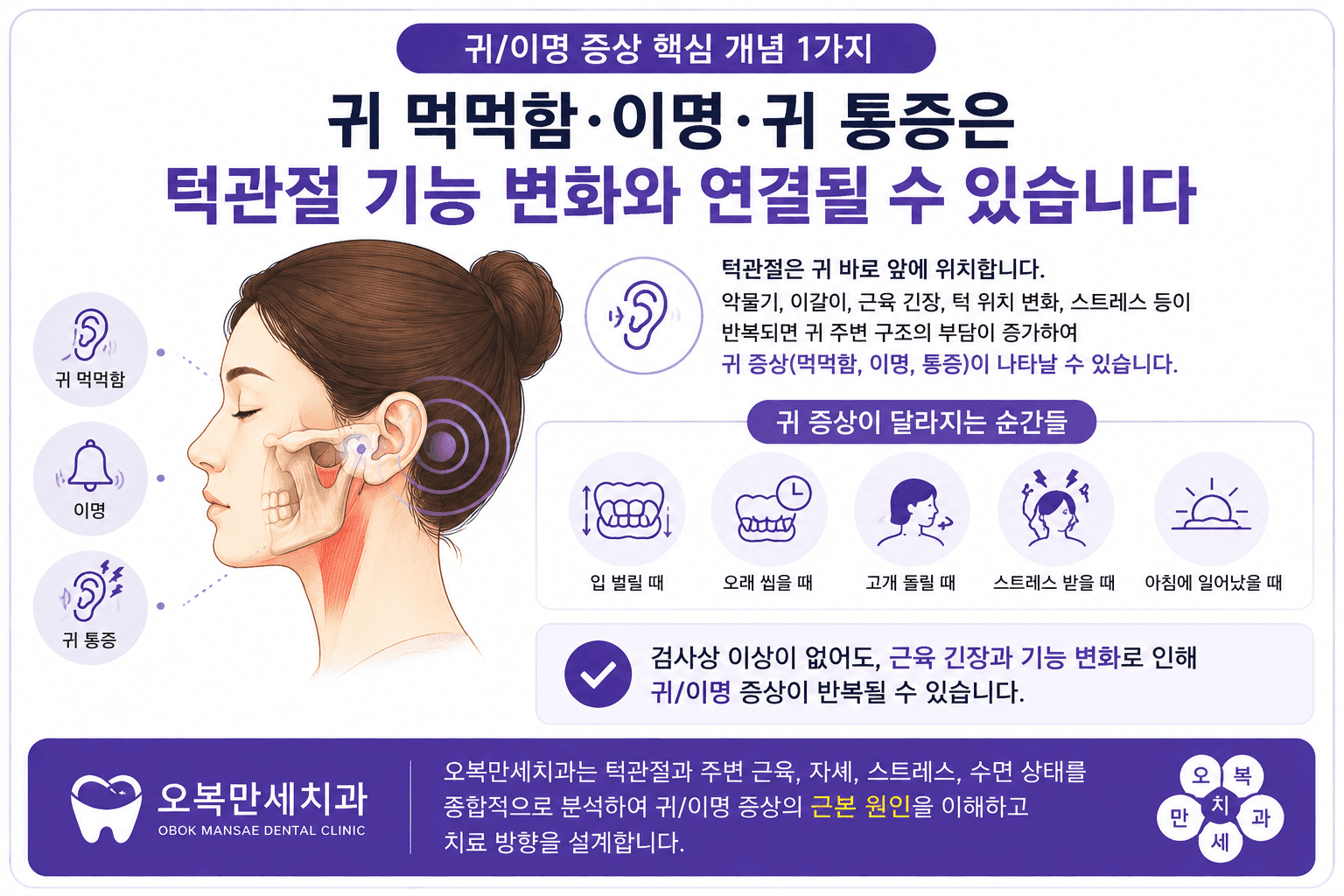
Ear fullness or tinnitus-like changes
For ear pressure, fluid-like sensations, or ringing-like sounds that seem to change with jaw opening, chewing, or head position.
Find your symptom path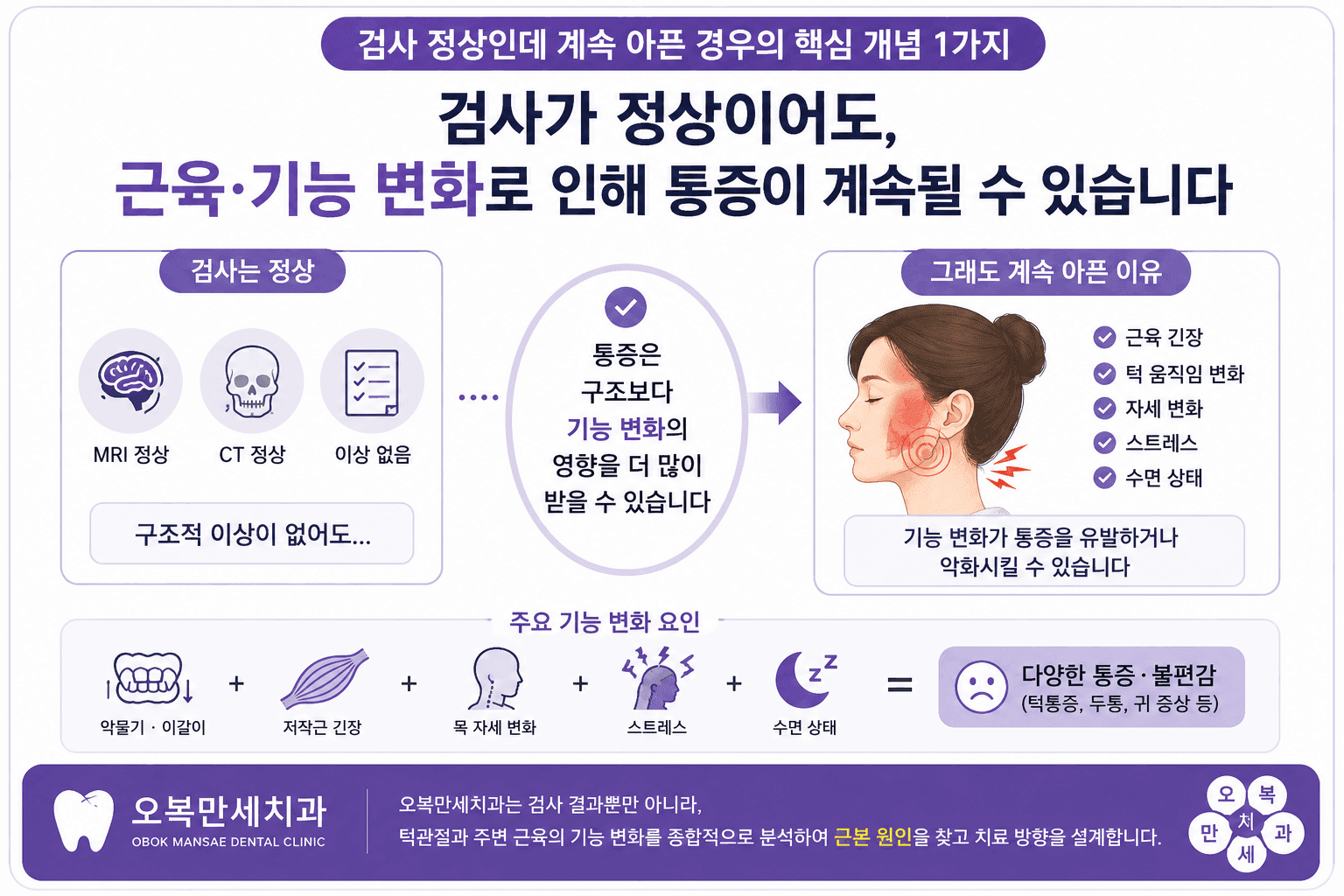
Pain that continues after normal exams
For situations such as tooth or gum pain after a normal dental exam, or ear pain after an ENT visit that did not find a clear ear problem.
Find your symptom path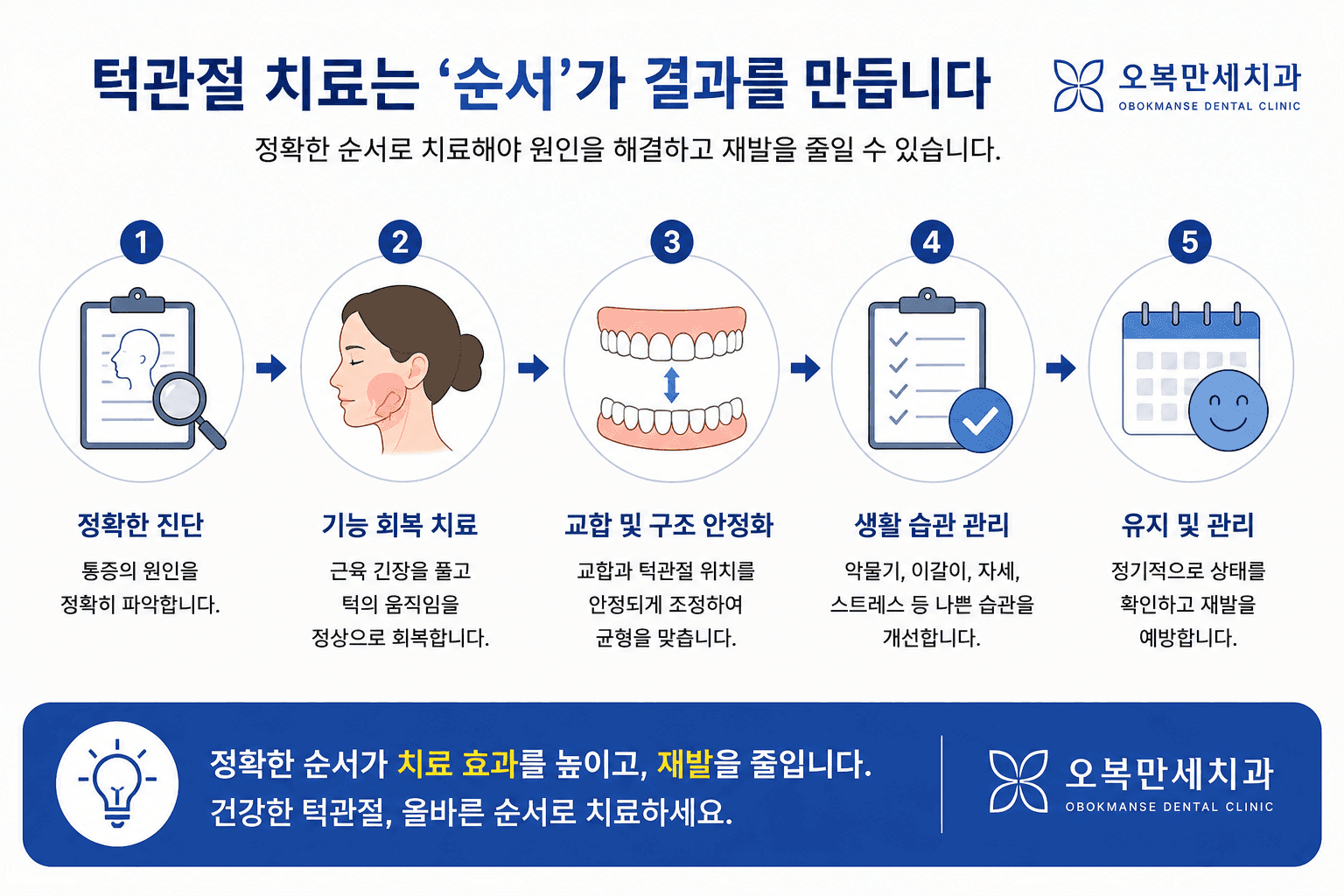
Jaw pain while chewing or yawning
For repeated jaw pain, clicking, locking, or limited opening that changes with chewing, yawning, wide opening, or one-sided use.
Find your symptom pathClinical reading path
From evaluation to the clinician responsible
Review how symptoms are examined, how care is ordered, and who is responsible for the clinical explanation.
FAQ
Questions patients often ask
Short answers help you compare symptoms, understand when an evaluation may be useful, and prepare clearer questions before contacting the clinic.
Read the FAQWhat does K-Style TMJ Care mean?
It is not one Korean-only procedure. It describes Obok Manse Dental Clinic's careful, conservative, and connected approach: organize the symptoms, examine movement and muscles, review bite and neck context, and choose the next step from the findings and treatment response.
Where is Obok Manse Dental Clinic located?
Obok Manse Dental Clinic is located in Guro-gu, Seoul, near the Guro Digital Complex area. The site provides booking guidance and map links so visitors can check access before contacting the clinic.
Can TMJ problems feel like ear symptoms?
Sometimes. Ear disease should be checked first, but jaw movement and chewing muscle tension can sometimes overlap with ear pressure, ear pain, or tinnitus-like changes.
Why does pain remain when scans look normal?
Scans and other static images can look normal while symptoms still change with motion, muscle tension, bite contact, or posture. A functional evaluation looks at those changes.
Is a splint always the first treatment?
Not always. Symptoms, jaw movement, muscle tension, jaw position, and bite conditions should be checked before deciding whether an appliance is useful.
Before Booking
Considering a visit?
Obok Manse Dental Clinic is located in Guro-gu, Seoul. Before booking, it can help to organize when symptoms get worse, whether jaw or neck movement changes them, and what previous dental, ENT, or imaging exams showed.